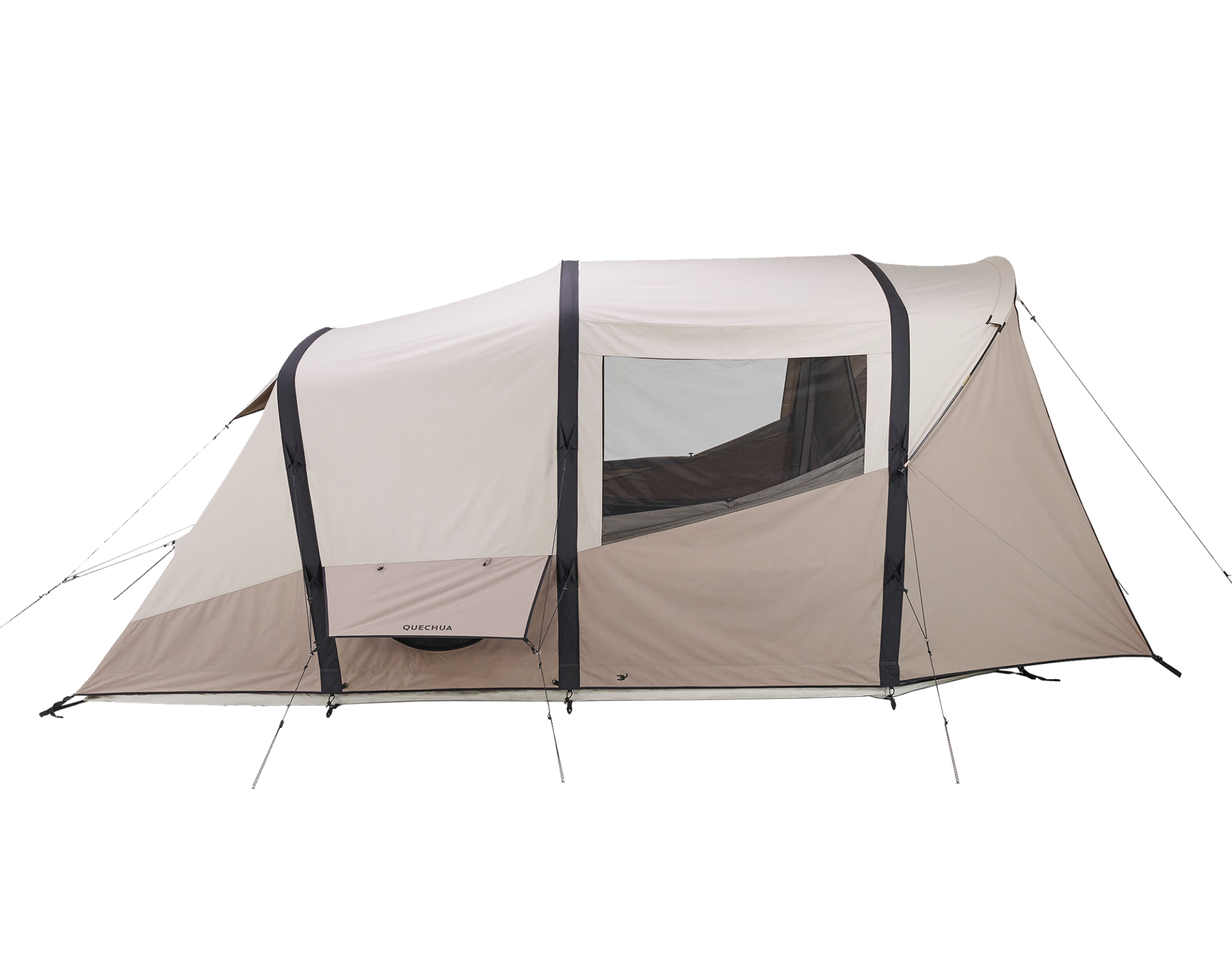
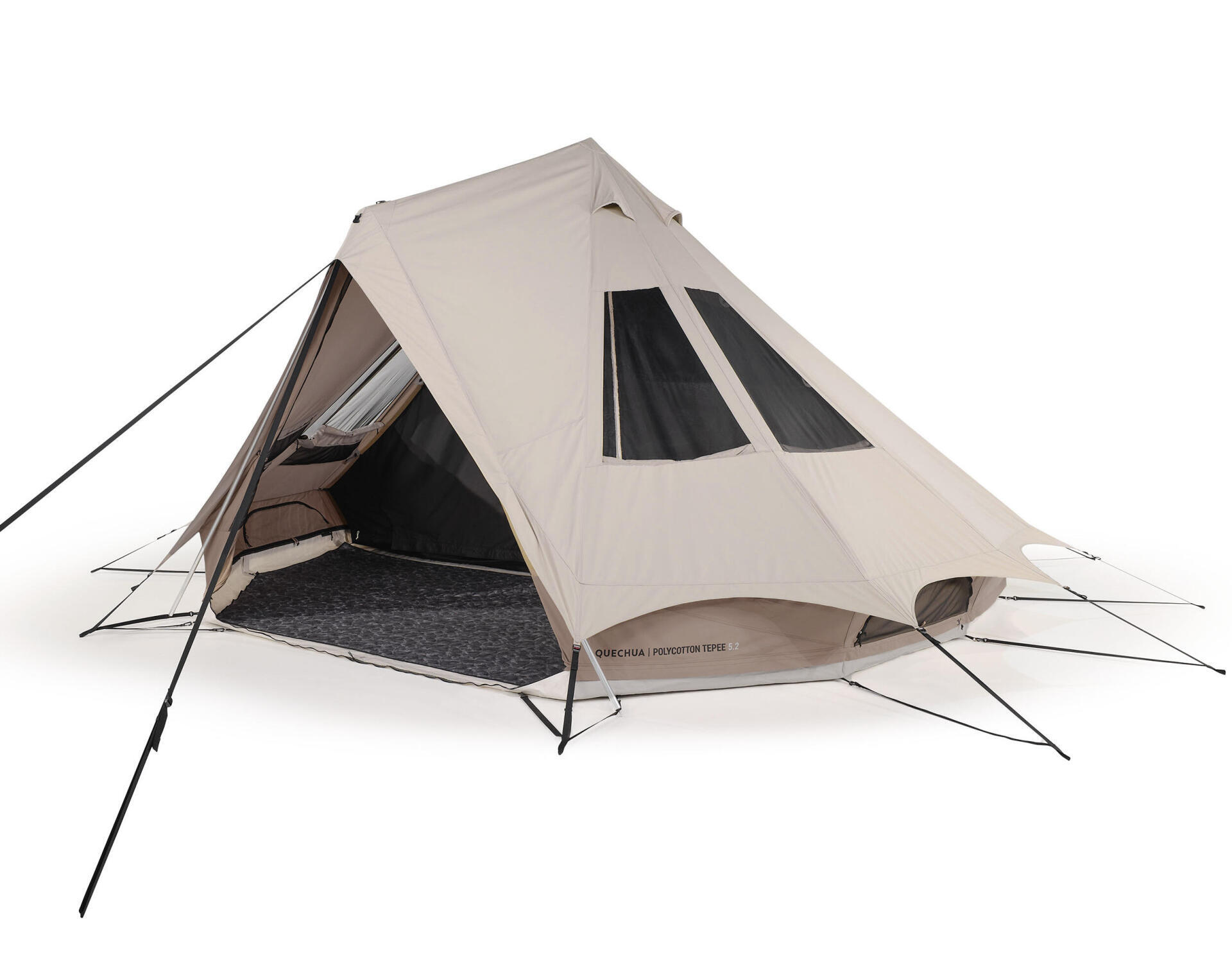
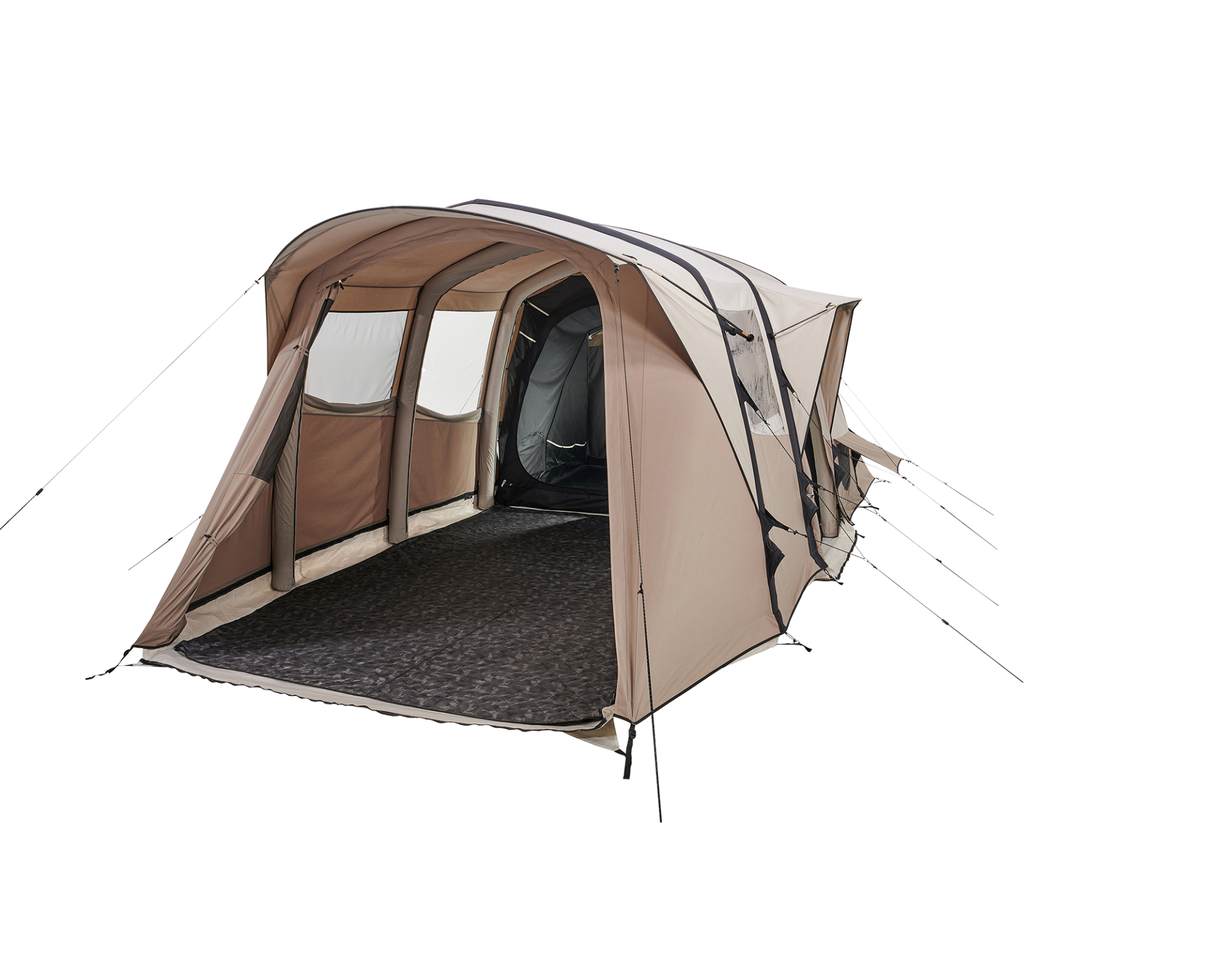
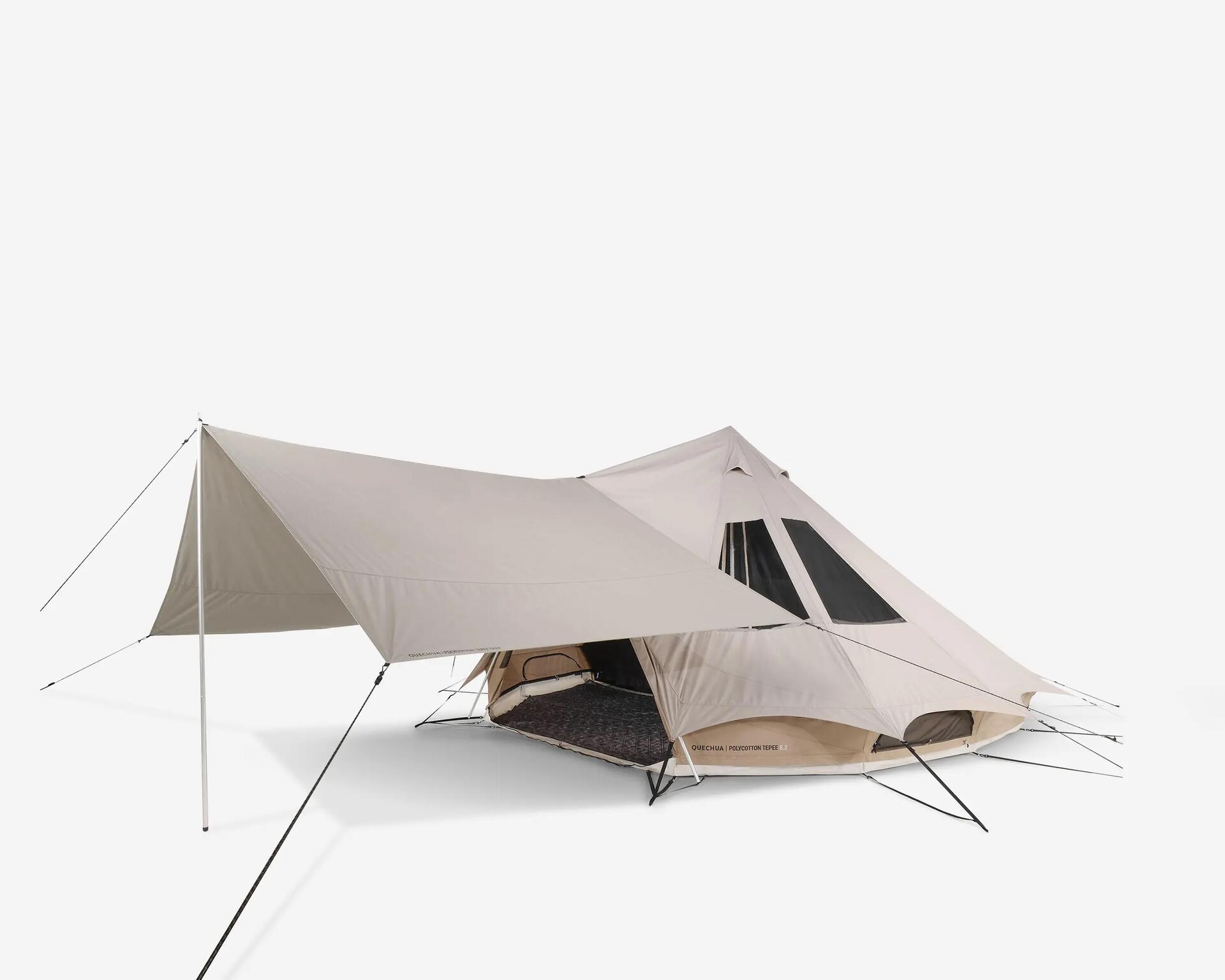
Assembling my polycotton tent
Find the assembly videos specific to each of our models below!

REF: 8648415, 8611649, 8755644, 8758159, 8828227
2023
Have you bought a polycotton camping tent and now have a question or a problem with your model? Don't panic, we are here to help you!
This information is compatible with all our Polycotton tent models, regardless of capacity.
Find the assembly videos specific to each of our models below!

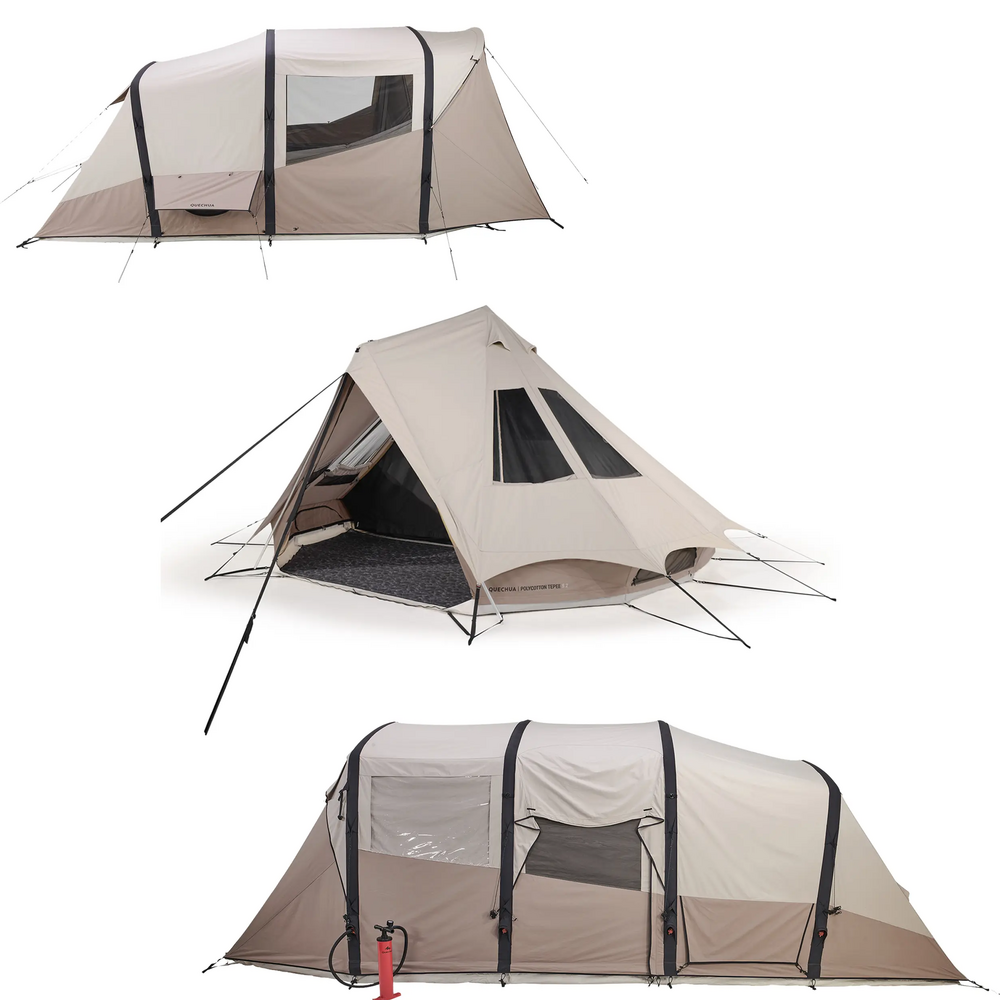
AIR SECONDS 4.2 POLYCOTTON - 4 pers - pitching

AIR SECONDS 6.3 Polycotton - 6-pers - pitching

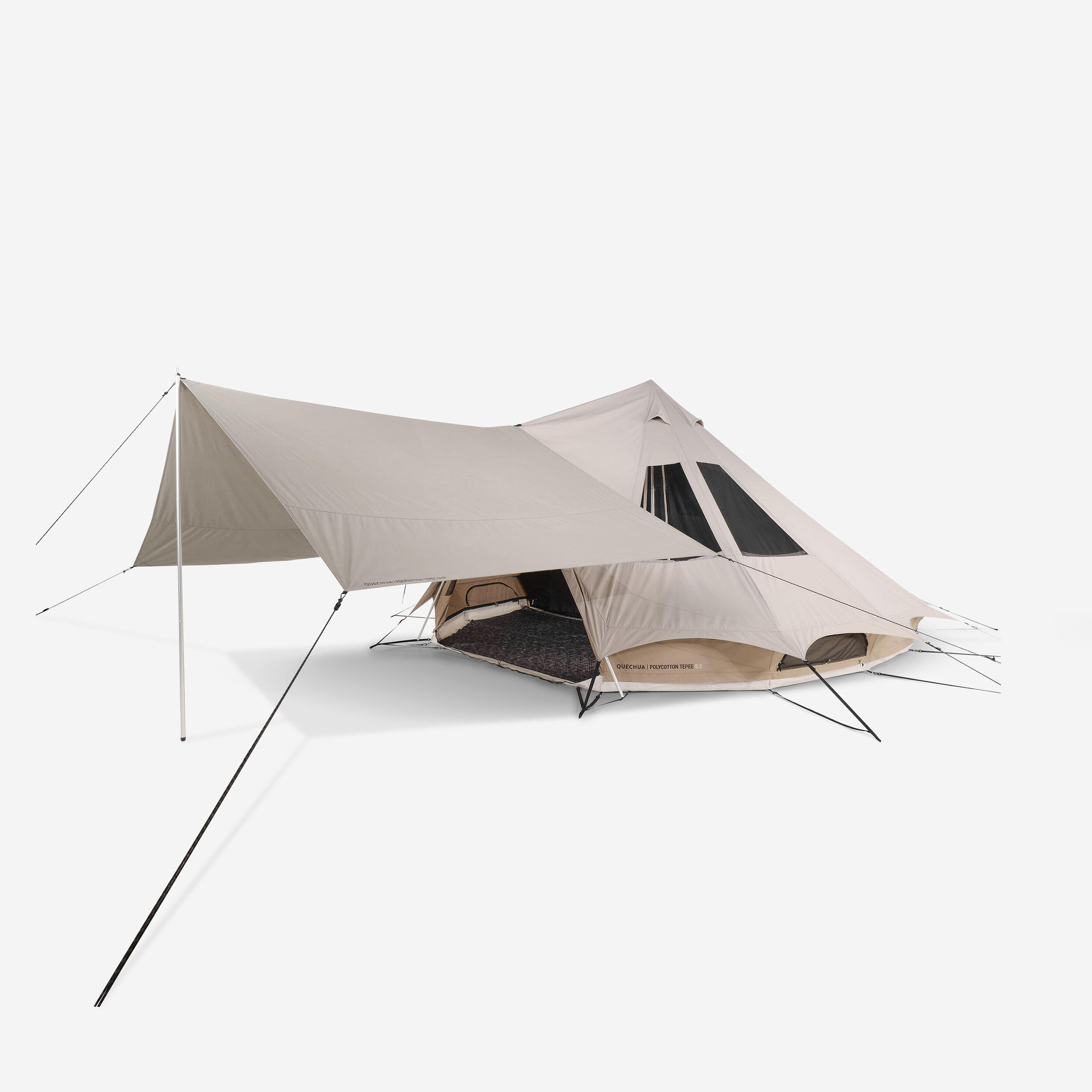
POLYCOTTON TEPEE 5.2 - 5 pers. - pitching

POLYCOTTON TARP - TEPEE 5.2 - pitching
Check out the tent striking videos specific to each tent model below.

Air Seconds 4.2 Polycotton - 4-pers - striking

AIR SECONDS 6.3 Polycotton - 6-pers - striking

POLYCOTTON TEPEE 5.2 - 5 pers. - dismantling

POLYCOTTON TARP - TEPEE 5.2 - dismantling
Download the Decathlon Camp app as soon as possible and find all the tutorial videos on how to pitch and strike your tent.
To avoid any unpleasant surprises when you get to pitch your tent, it's a good idea to carry out a few checks so you can set off with peace of mind.
- Take your tent out of its bag to air it and reduce any bad odours, and clean it if necessary (see our maintenance advice below).
- Check the condition of your equipment: make sure that a tent pole ring isn't broken, that the guy ropes aren’t showing any defects, that you aren’t missing any pegs, etc.
- Inspect the fabric and groundsheet to check that there are no holes
- Check the condition of the zips to make sure they are working correctly
Polycotton tents have many benefits:
- better resistance to UV light
- more breathability
- more durability
- more lightweight
Warning: polycotton is a more delicate fabric when compared to other fabrics, so take special care when drying and cleaning it, in particular. Check out all our maintenance tips below.
Before pitching your tent, it is essential to choose an appropriate spot. So, we have listed some tips to help you find the perfect spot :
If you have a pitch:
- Do not pitch your tent near the entrance, restaurants and activity centres of your campsite in order to get as much peace and quiet as possible.
- Check out the neighbouring pitches to make sure you aren't next to a summer camp or a large family that could be very noisy.
- Prepare a sufficiently large area outdoors if you have children so that they can let off some steam
- Check your pitch to see if there are any stones, branches or other objects that could potentially damage the tent
- A shaded area is preferable if the period when you are leaving is very hot
If you are wild camping:
- Look for a flat, relatively clear area (no stones, branches, etc.) to sleep well and not damage your tent
- Do not pitch tent too close to water. There are a number of reasons for this: humidity, insects, the water level can rise up, etc.
- Reduce the exposure to the wind so that you don't get buffeted and opt for a relatively sheltered location, e.g. near undergrowth.
- Always place the entrance of your tent away from the prevailing wind
- When it's cold, find a location that is exposed to the morning sun to avoid getting too cold.
All our tents are tested in a laboratory to validate their waterproofness: a first test is carried out for 3 hours under 200 L of water per hour and per square met. The second test is carried out in real conditions by our experts.
As far as wind resistance is concerned, our tents are also tested in a wind tunnel on a turntable.
To see the specific characteristics of your tent model, please consult the product sheets available on the Decathlon website.
Weather tests Air Seconds tents
Recurring rain throughout the day, hot air that persists when the outside temperature drops, body heat… these are factors that can create condensation inside your tent. To avoid this phenomenon, here's some advice:
- Open the vents of your tent as much as possible, even when it's raining
- Avoid any creases when pitching your tent, as these favour the concentration of water drops
- Do not pitch your tent too close to a water point but rather in a sheltered place where temperature and humidity are regulated.
To remove the condensation already present, gently wipe off the droplets with a cloth and ventilate your tent as much as possible. Open the door until it can dry out.
using it correctly
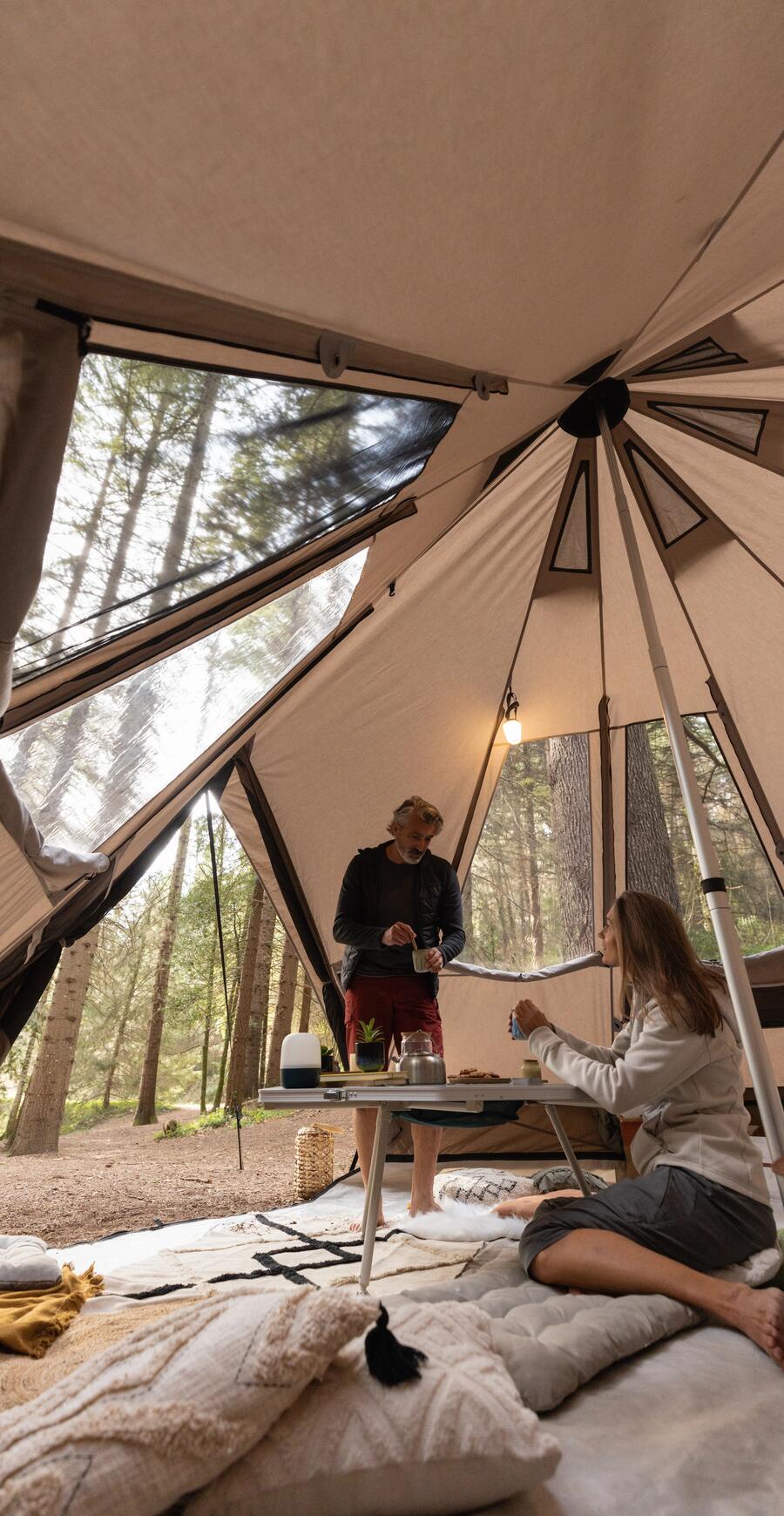
Before pitching your tent, leave the front door closed to avoid stretching the canvas too much when you pitch the poles. Do not tighten the guy ropes too much because too much tension on the canvas could damage it. Finally, do not leave the tent too exposed to the sun because UV light causes premature wear.
WASH
Do not use any cleaning products to wash your tent, but rather plain or soapy water if necessary. Thoroughly rinse the product when you have finished.
For polycotton tents, we recommend frequent cleaning of the fabric and removal of stains as soon as possible.
DRY
It is important to dry your tent well after cleaning it to avoid traces of mold. Polycotton tents require extra care and must be completely dry when stored.
If you have room at home, assemble it completely, open all the doors so that it drys quicker. If, on the contrary, you run out of space, detach the pieces one by one and extend them.
Finally, remember to dry the cover as well.
Storing
Store your tent in a dry place at room temperature. Remember to close the front door to prevent your tent from being too tight when you put it up again.
Restoring the waterproof properties
Several factors can affect the waterproofness level of your tent, such as exposure to the sun, friction inside the cover or even natural wear.
Therefore, we advise you to apply a waterproofing spray on the canvas at least once a year.
Take advantage of the expertise of our employees and book an appointment online to benefit from the following workshop service.
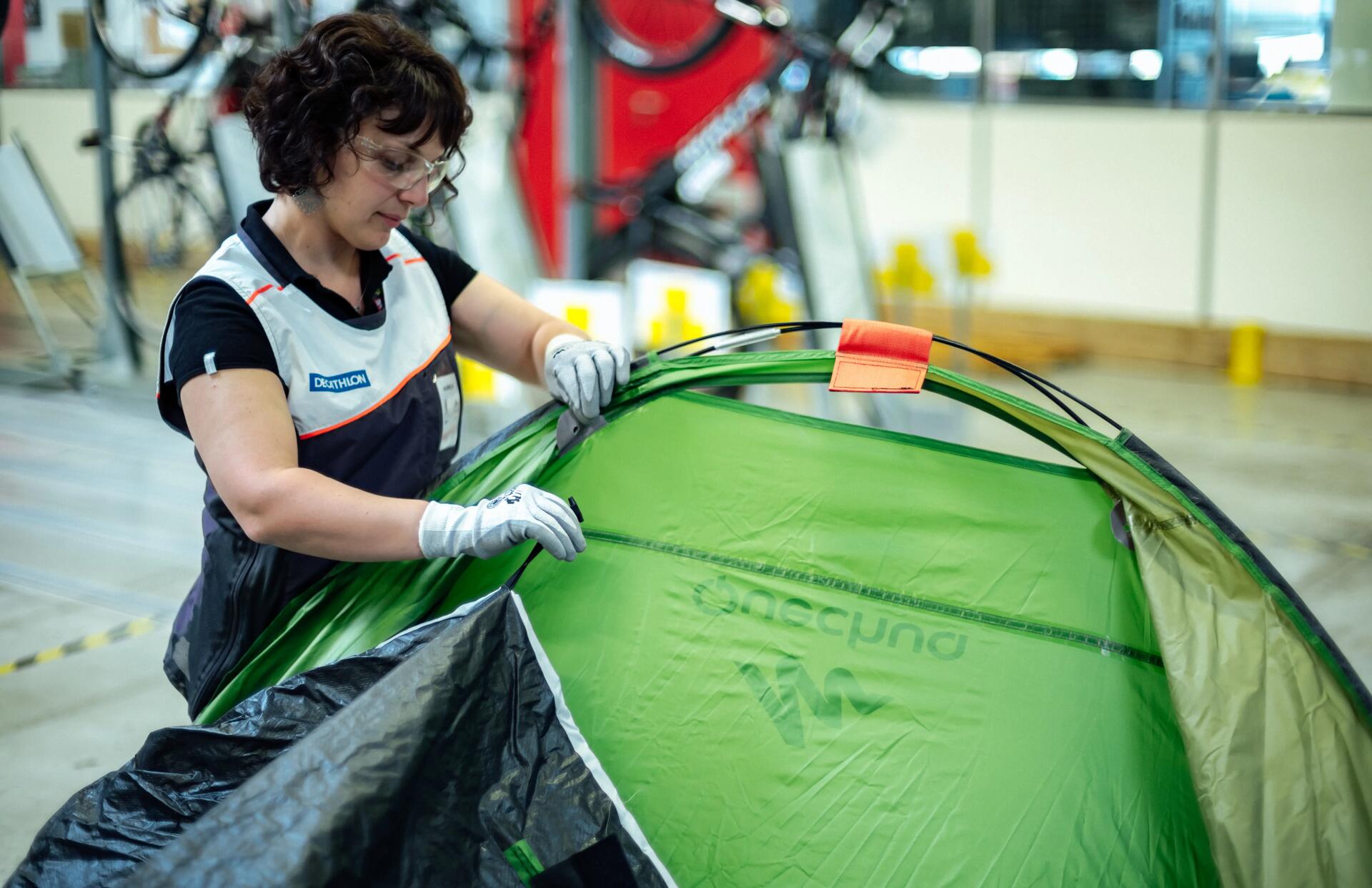
Replacing the flysheet
Choose the model of your tent and find all the compatible spare parts so you can carry out the repairs yourself. To repair the poles, there is a diagram that you can use to identify the faulty part and find out the correct length.
Consult the technical diagram and find the components of your tent by clicking here.
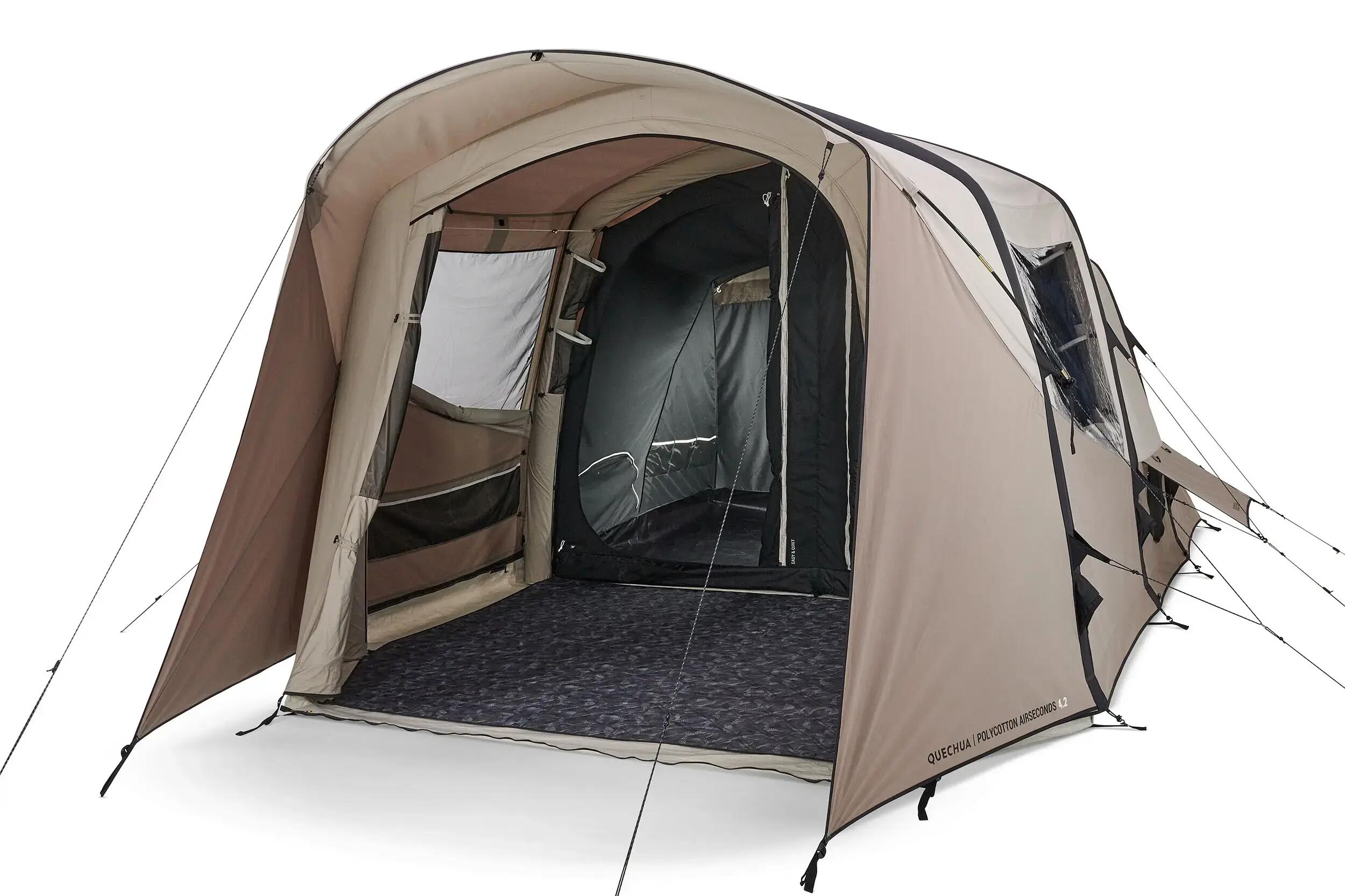
Consult the technical diagram and find the components of your tent by clicking here.
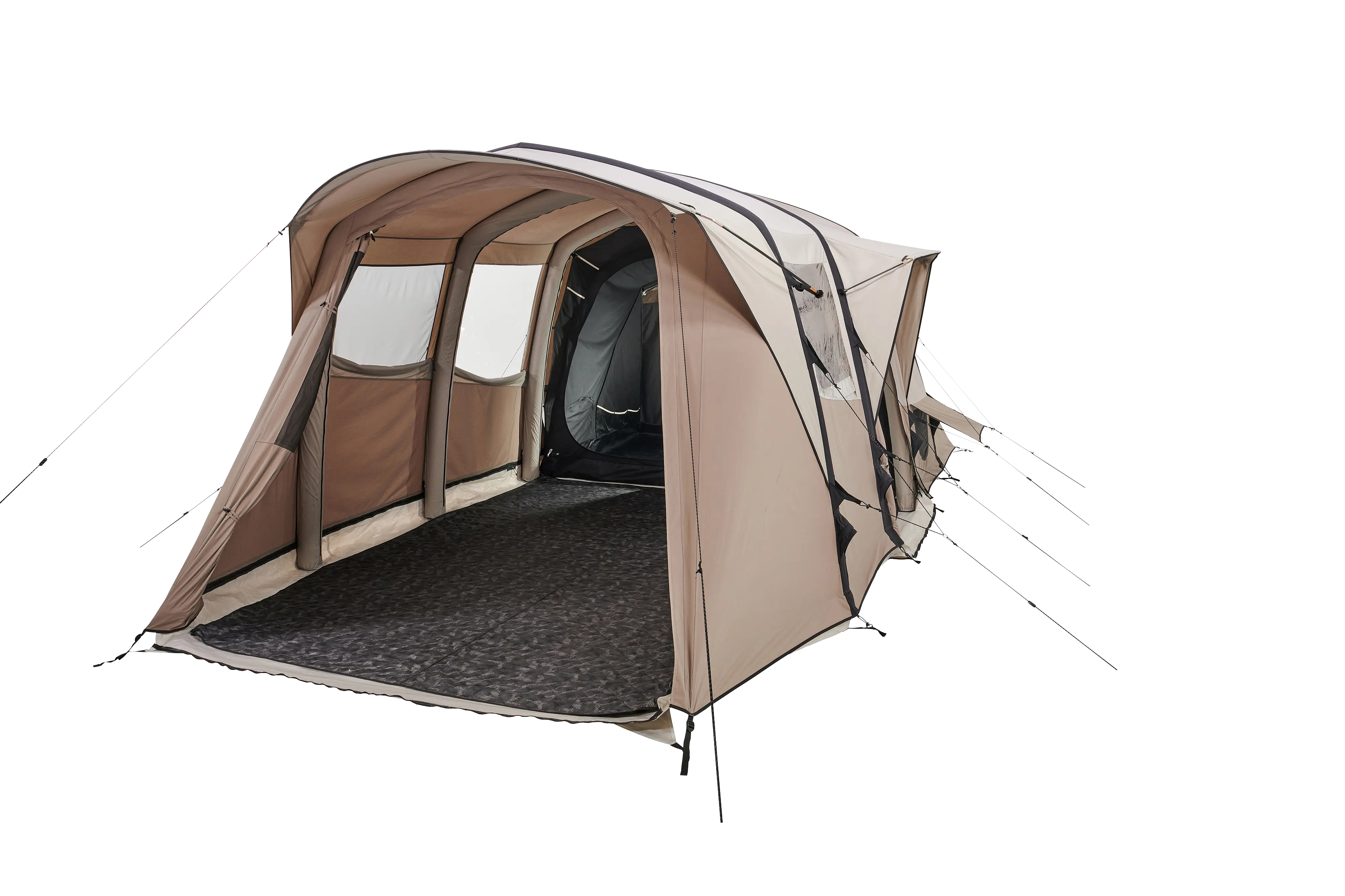
Consult the technical diagram and find the components of your tent by clicking here.
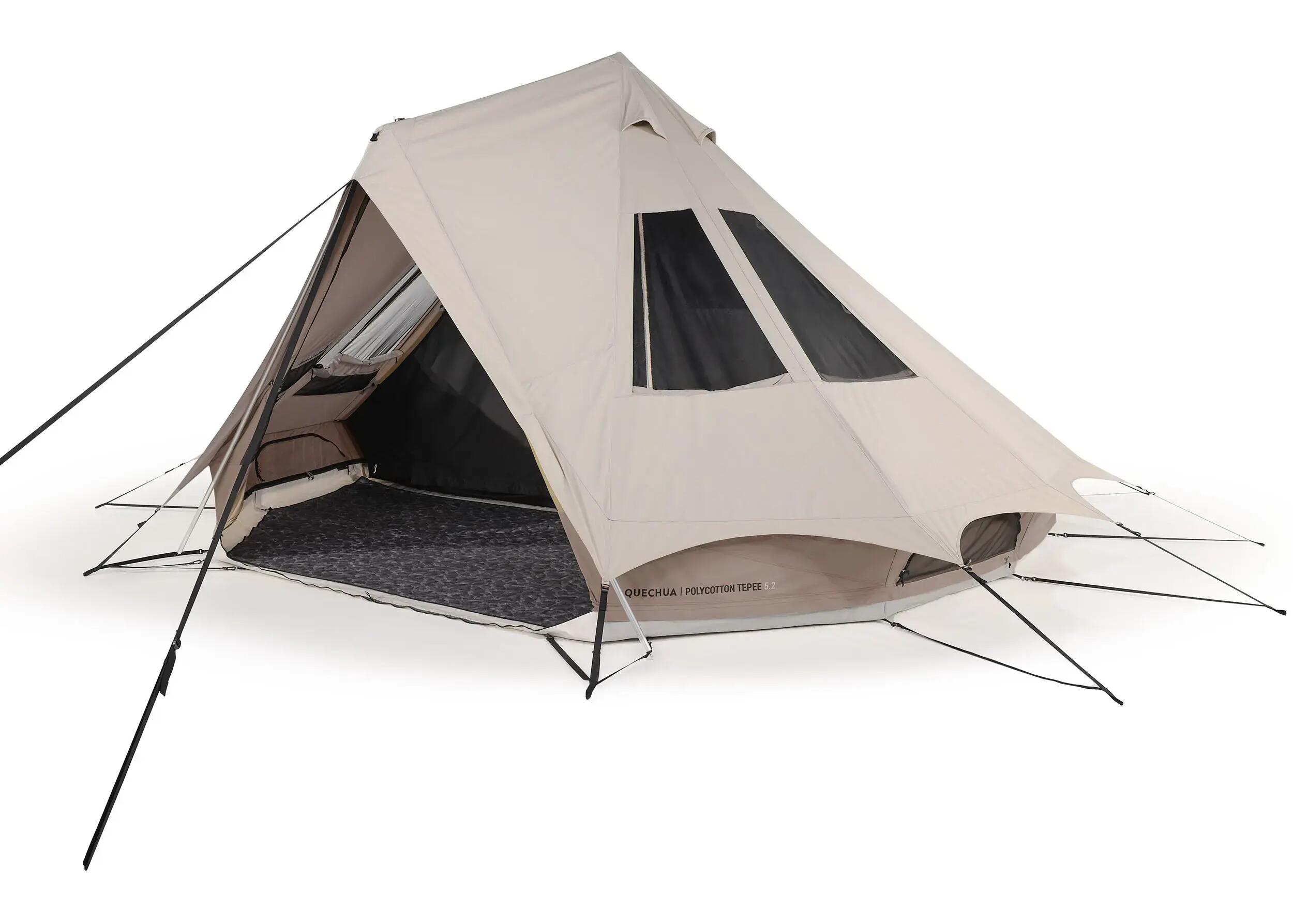
VIDEO REPAIRS
In the following videos, you will find all the explanations you need to carry out the various possible repairs.
CHANGING THE INFLATABLE TUBE OF YOUR POLYCOTTON TENT

CHANGING THE INFLATABLE TUBE OF YOUR POLYCOTTON TENT

REPAIRING A TENT HOLE
A RIP HAS FORMED IN MY FLYSHEET OR MY BEDROOM
You just need to apply a patch or adhesive to fill the hole. We recommend that you apply them on the inside of your flysheet or your bedroom for better adhesion.
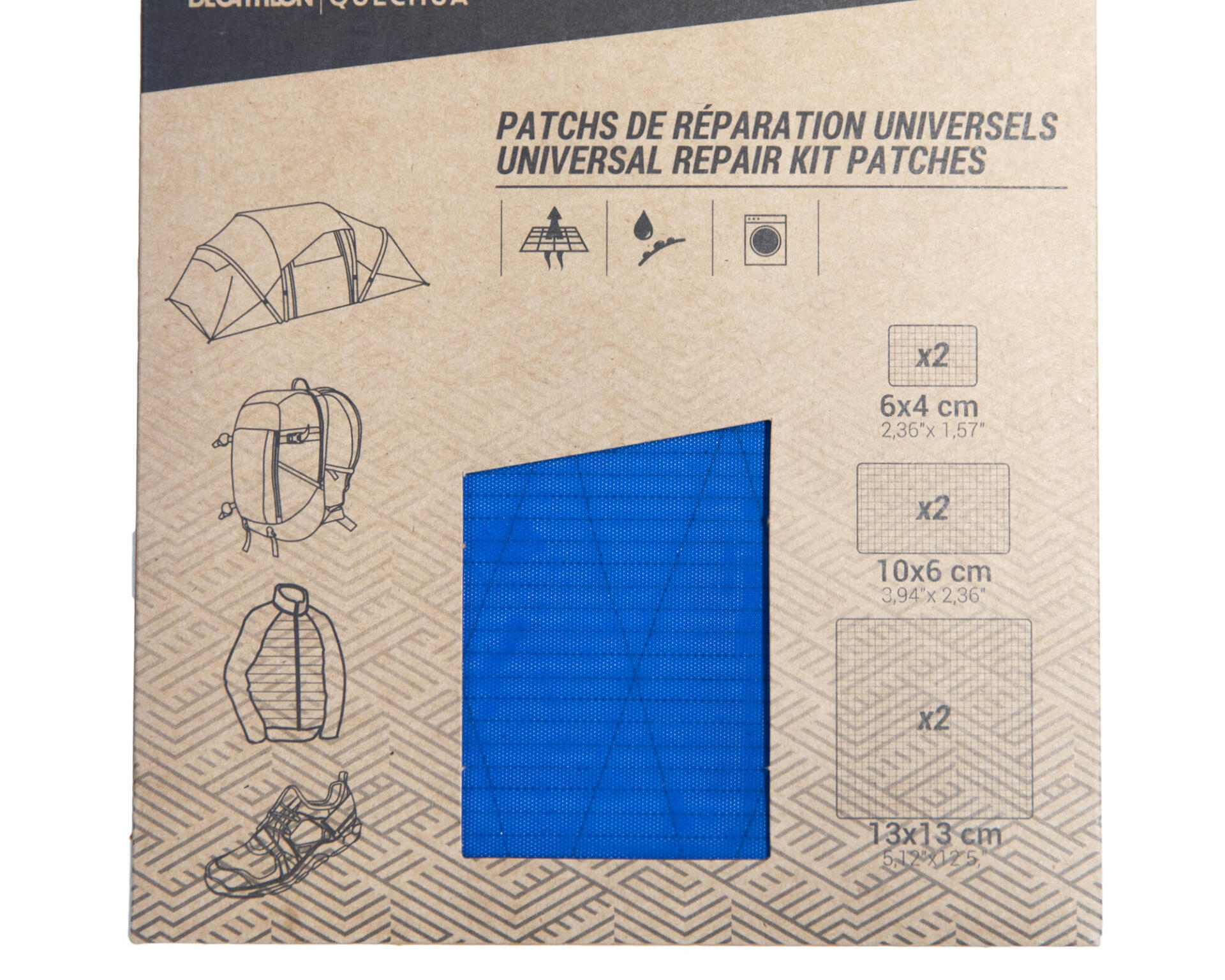
Self-adhesive repair patches
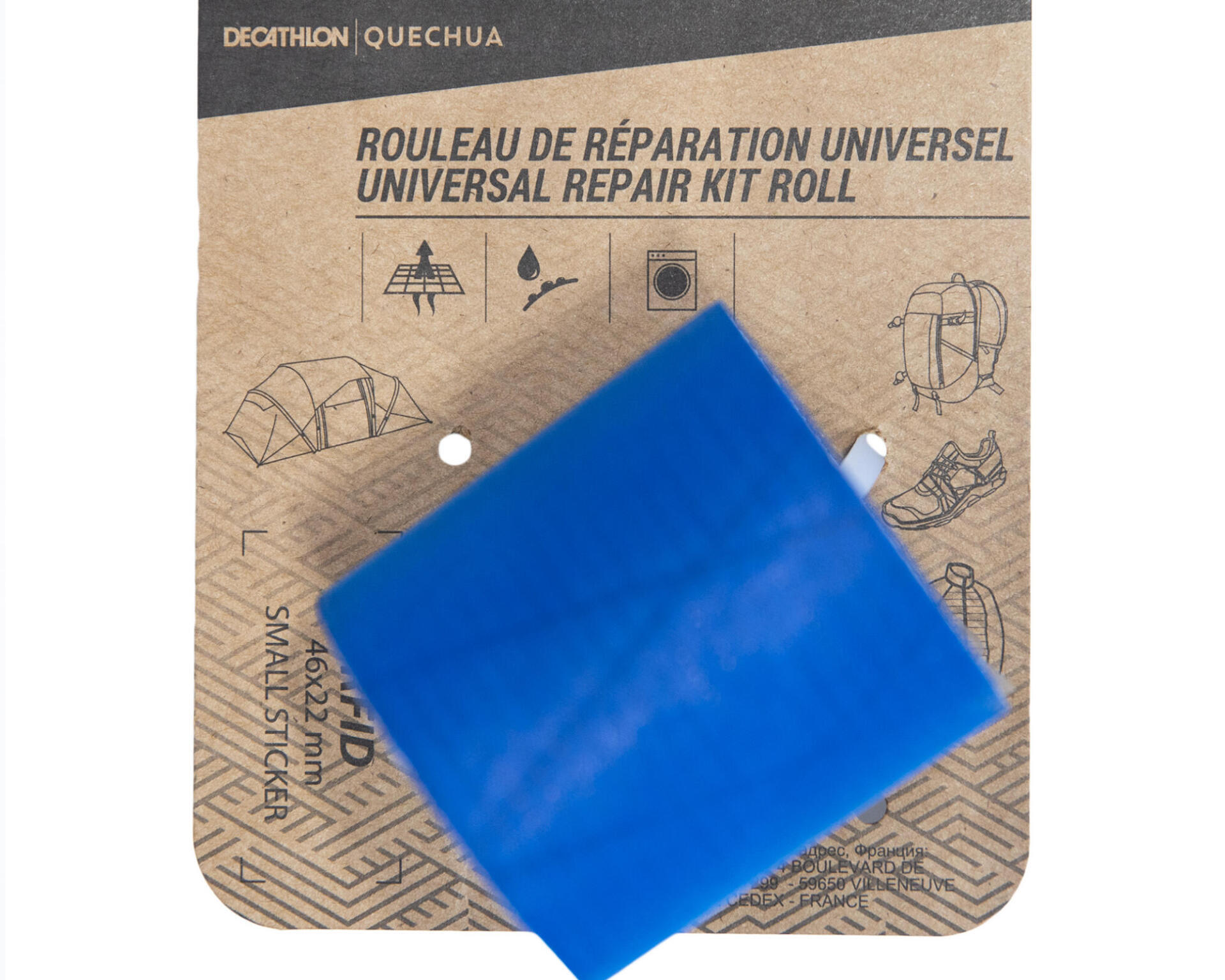
Self-adhesive repair tape
You've stopped using your tent and don't know what to do with it? Rather than throwing it away, don't hesitate to resell it second-hand on the Decathlon Second-hand platform!